KQ warns grounded planes, high fuel costs hinder financial recovery
This story has significance for readers across Kenya and beyond.
KQ warns engine shortages, high fuel costs hinder financial recovery
Audio By Vocalize
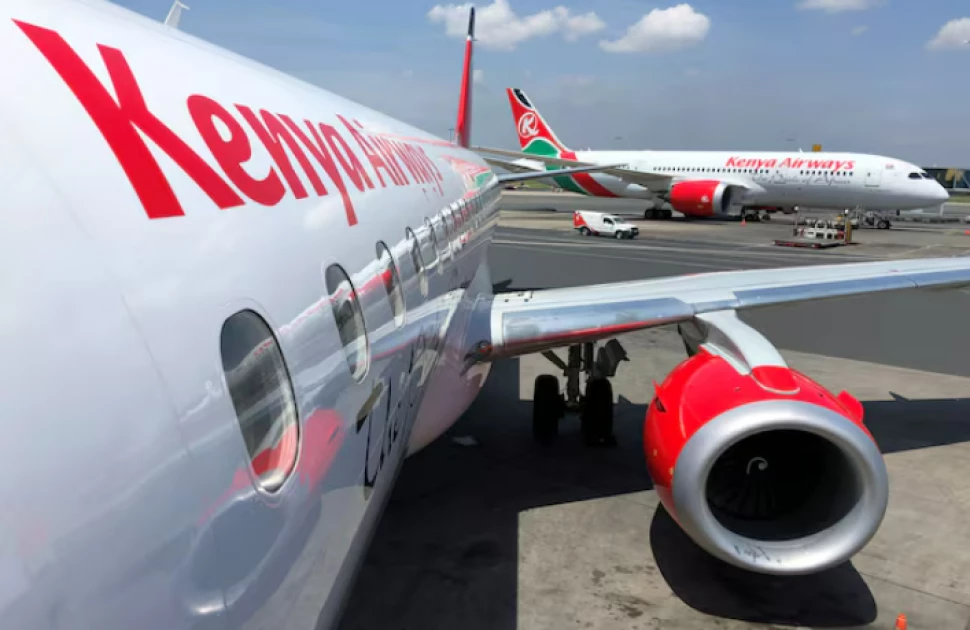
The national carrier has spent years working to restore its financial health, but its recovery has been complicated by a difficult operating environment. Three of its Boeing 787 Dreamliners were grounded for much of the first half of the year as global shortages of engines and spare parts prolonged maintenance timelines.
“Engines are taking longer to repair. It used to take 60 days; now it is taking 120 days or more. Why? Because the aviation industry is flourishing. Spare parts are harder to source,” said Kenya Airways acting CEO George Kamal.
For KQ, every grounded aircraft means fewer seats available for sale, limiting passenger numbers and revenue. The capacity constraints have come alongside high fuel costs, with fuel typically accounting for about 30 per cent of an airline’s operating costs.
Despite the challenges, the airline says demand for its services remains strong. More than 90 per cent of available seats on its US and European routes were filled in March.
“The major issue is that profit per seat is very low,” Kamal said.
Kenya Airways says its recovery strategy is focused on restoring capacity while strengthening its financial position. The grounded Dreamliners are gradually returning to service, with the airline targeting full capacity by the end of the year and a fleet of more than 60 aircraft within three years.
The airline, however, continues to contend with legacy debt weighing on its balance sheet. The government has assumed Ksh.63.1 billion of the debt, which is expected to be converted into equity once a strategic investor is secured.
KQ is also pursuing a Ksh.64 billion recapitalisation while implementing measures to reduce operating costs.
“A lot of our debt is as a result of all of our fleet that we acquired at the same timing, and many things happened after that, the latest being Covid and then the elevated fuel prices,” said Kenya Airways Chief Financial Officer Mary Mwenga.
“We continue to pay for all this debt, but something comes in and affects your cash flow, and you still have to balance your operations with these capital-intensive investments. So we have plans to retire this debt at the right timing,” she added.
Kenya Airways is also seeking to diversify its revenue streams and reduce its reliance on passenger travel.
“We have to diversify the business,” Kamal said.
The airline is targeting growth in cargo and aircraft maintenance services for other carriers, including European airlines. Cargo currently contributes about 11 per cent of KQ’s revenue, with the airline targeting an increase to 20 per cent over the next two to three years.
Kenya Airways’ recovery will ultimately depend on its ability to restore its fleet, contain operating costs and convert strong passenger demand into sustainable profits.
Reporting originally appeared via Citizen Digital. Read the full source for additional context.