KWS Explains New Ear-Notching Exercise Targeting 22 Black Rhinos
This story has significance for readers across Kenya and beyond.
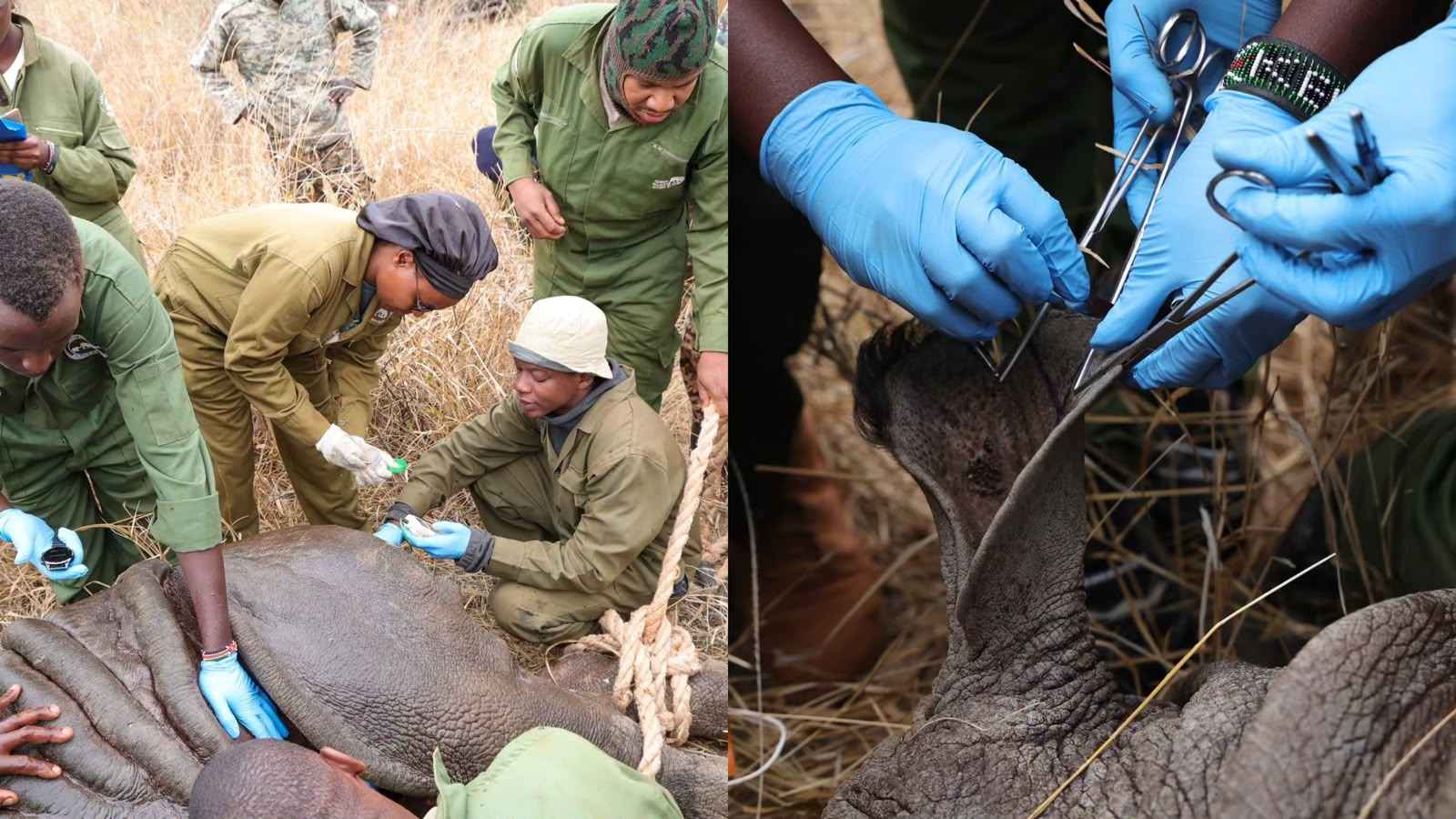
Kenya Wildlife Service (KWS) has launched an ear-notching and tagging exercise targeting 22 black rhinos at the Tsavo West Rhino Sanctuary.
In a statement on Tuesday, August 18, KWS explained that the exercise is part of efforts to strengthen the monitoring and management of the critically endangered species.
"At the Tsavo West Rhino Sanctuary, the world’s largest rhino sanctuary, Kenya Wildlife Service is undertaking an ear-notching and tagging exercise targeting 22 black rhinos, strengthening the monitoring and management of this critically endangered species," the statement read.
KWS explained that ear-notching is an important conservation tool because the distinctive marks allow teams to identify individual rhinos in the wild and follow their movements over time.
The information collected also helps conservationists maintain records that can be used to assess the animals’ health and reproduction.
Read More
"Every notch helps tell a story. By identifying individual rhinos and tracking their movements, conservation teams can better understand population trends, identify emerging threats and make informed decisions that support the species’ recovery," the statement added.
The exercise comes against the backdrop of Kenya’s efforts to recover its black rhino population, which was severely affected by poaching.
According to KWS, in 1970, Kenya had approximately 20,000 black rhinos, but rampant poaching had reduced the population to fewer than 400 by the mid-1980s.
Sustained conservation efforts have since helped reverse the decline, with Kenya’s black rhino population increasing to an estimated 1,147 individuals by 2025.
KWS said continued identification and monitoring of individual rhinos remains essential to support the species’ long-term recovery.
"Every rhino identified strengthens our ability to monitor and protect the species. Every record adds to our understanding. Every conservation action helps secure their future," the statement concluded.
This comes weeks after KWS together with the National Museums of Kenya and other conservation partners, launched a simultaneous flamingo census across seven Rift Valley lakes to track the movements and population patterns of Lesser Flamingos.
In a statement on Monday, August 10, the agency said the exercise covers Lakes Logipi, Magadi, Bogoria, Nakuru, Naivasha, Elementaita and Baringo.
KWS highlighted the long-standing significance of Lesser Flamingos to Kenya's Rift Valley lakes, particularly Lakes Nakuru, Bogoria and Elementaita, where the birds have traditionally gathered in large numbers.
"For decades, millions of Lesser Flamingos have painted the shores of Lakes Nakuru, Bogoria, and Elementaita pink, creating one of the world's most spectacular wildlife experiences," the statement read.
KWS noted that changing climatic conditions are affecting water levels, food availability and habitat conditions across the Rift Valley lake system, influencing how flamingos move between different lakes.
"Today, a changing climate is influencing water levels, food availability, and habitat conditions across Kenya's Rift Valley lakes. In response, these remarkable birds continue to move between lakes in search of suitable feeding grounds, reminding us that nature is constantly adapting," the statement added.
KWS said the data collected during the census will play a role in implementing Kenya's National Recovery and Action Plan for the Lesser Flamingo, particularly in guiding habitat protection, research and broader conservation initiatives.
"The census findings will contribute to Kenya's National Recovery and Action Plan for the Lesser Flamingo, helping guide habitat protection, research, and conservation efforts across the Rift Valley lake system.
"Every flamingo counted brings us one step closer to safeguarding this iconic species and the wetlands it depends on," the statement further read.
KWS also emphasised that fluctuations in flamingo numbers are a natural occurrence, while maintaining that the Rift Valley lake system continues to offer some of the world's outstanding birding and wildlife experiences.
"While flamingo numbers naturally fluctuate between lakes, Kenya's Rift Valley remains one of the world's most remarkable birding destinations.
"From the breathtaking scenery of Lake Nakuru National Park to the tranquil beauty of Lake Elementaita and beyond, each lake offers a unique wildlife experience throughout the year," the statement noted.
Reporting originally appeared via Nairobi Leo. Read the full source for additional context.