Tupac Shakur Murder Trial Opens, Prosecutors Allege Mastermind Behind 1996 Killing
Nearly three decades after the iconic rapper's death, Duane "Keffe D" Davis stands accused of orchestrating the drive-by shooting in Las Vegas.
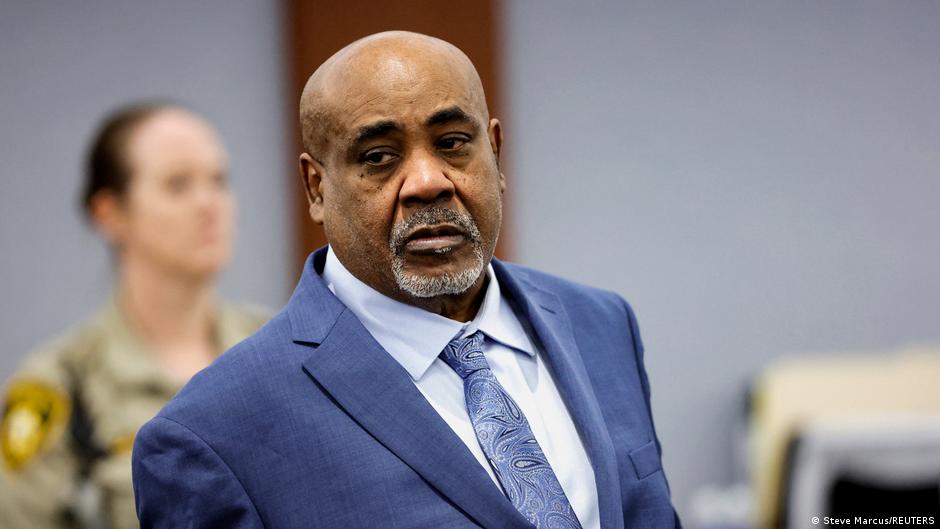
The murder trial concerning the 1996 killing of seminal hip-hop artist Tupac Shakur has officially begun, with prosecutors asserting that Duane "Keffe D" Davis orchestrated the fatal drive-by shooting. Nearly three decades after the incident that shocked the music world, the prosecution commenced its case by informing jurors that the renowned rapper's death stemmed from a planned act of gang retaliation, allegedly masterminded by Davis.
In proceedings held in Clark County, Nevada, Chief Deputy District Attorney Binu Palal clarified that while Davis "did not pull the trigger," he is accused of meticulously planning the attack. Palal stated, "But he did plan the shooting in retaliation of the beating of his nephew." Davis, identified as a former leader of the South Side Compton Crips gang and dubbed a "shot caller" by authorities, faces a single count of murder with a deadly weapon. The 63-year-old has entered a plea of not guilty.
During Tuesday's court session in Las Vegas, Palal detailed how Davis allegedly ordered the killing following an assault on his nephew, Orlando "Baby Lane" Anderson, by a rival gang. The prosecution presented video footage showing Shakur's entourage attacking Anderson. Palal then connected these events, telling jurors that "two and a half hours later... Tupac is gunned down in a drive-by shooting from a white Cadillac in an act of revenge." Crucially, Palal indicated that jurors would hear directly from Davis himself regarding these events, referencing his past interviews with law enforcement and media, along with his 2019 memoir, "Compton Street Legend," where he recounted being in the vehicle from which Shakur was shot and described handing a gun to those in the backseat. Audio of Davis explaining the shooting moment was also played.
Countering the prosecution's narrative, defense attorney Michael Sanft dismissed it as "fiction" in his opening statement. Sanft argued that prosecutors lacked concrete evidence to establish his client's culpability, asserting that nearly 30 years of police investigation had repeatedly failed to produce a definitive account of the events. He characterized the long-running inquiry as "biased," "sloppy," and "incomplete," questioning the reliability of Davis's interview and memoir accounts without corroborating facts.
Under Nevada law, an individual can be charged with murder even if they participated in the crime without personally firing the weapon. If convicted, Davis could face a life sentence without parole. The trial, where Davis was observed in a blue suit and tie, is anticipated to extend for up to six weeks.
Tupac Shakur, known universally as 2Pac, was just 25 when he suffered fatal injuries in the September 7, 1996, drive-by shooting, dying six days later in hospital. His untimely death prematurely ended an immensely popular career, yet Shakur remains one of hip-hop's most influential and versatile artists. His music, often addressing issues faced by Black Americans, resonated deeply and continues to do so globally, including across Kenya and East Africa, where his powerful lyrics and themes of struggle, resilience, and identity have cemented his status as a cultural icon and a voice for the marginalized. He was also a central figure in the intense East Coast-West Coast hip-hop rivalry.
As legal proceedings unfold to determine responsibility for one of music's most enduring mysteries, the world watches closely for a resolution. (Reporting by DW News)