School meals can become a powerful driver of food-system transformation
This story has significance for readers across Kenya and beyond.
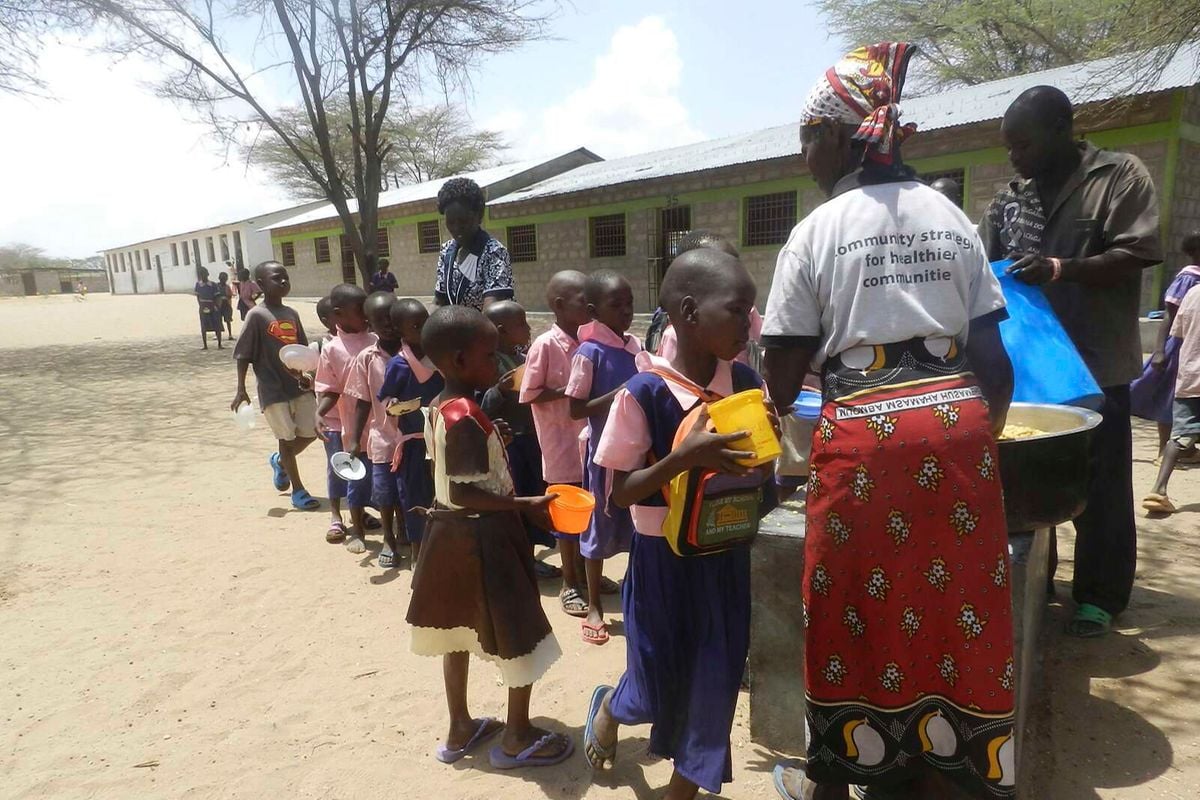
Every day, millions of children sit down to a meal at school. Often, that meal is taken as an intervention towards better nutrition, improved education or social protection. While this is key, school feeding programmes can also be a lever for transforming food systems.
Across Africa, about 71.5 million students receive daily school meals. Globally, government-led programmes reach more than 466 million children, according to the World Food Programme (WFP).
These programmes represent one of the largest and most direct points at which public policy meets food production, markets, nutrition and human development.
The question, therefore, is not just whether children are being fed; it is about the kind of food system that each meal helps to build. And this matters because the world faces a paradox.
While enormous quantities of food are produced globally, millions of people can barely afford or access healthy diets.
At the same time, farmers face climate shocks, volatile markets and declining agricultural diversity, while many nutritious indigenous, Neglected and Underutilised Species (NUS) remain economically marginal.
Nutritional quality
At the intersection of these challenges in Kenya and across the world are school meals.
Home-grown school feeding is a strong model. By sourcing food from local smallholder farmers, governments can turn public procurement into a predictable market for producers while improving the diversity and nutritional quality of children’s diets.
If school systems create reliable demand for millet, for example, actors across the whole value chain will be involved and benefit.
This means that farmers will grow it, aggregators will collect and aggregate the produce while millers will create employment. Importantly, children receive a nutritious meal while Neglected and Underutilised Species are better put to use.
Primarily, school feeding should be viewed as a strategic public investment with implications across agriculture, nutrition, education, livelihoods, local enterprise and climate resilience.
According to the School Meals Coalition, every $1 (Sh129) invested in school feeding can generate a return of up to $35 (Sh4,515).
Africa’s food heritage contains thousands of edible species.
The continent, for example, is home to more than 1,000 traditional edible greens, fruits and vegetables. Yet school meals and food markets frequently rely on a narrow range of crops.
According to the Food and Agriculture Organization (FAO), 75 per cent of the world’s food is generated from only 12 plants and 5 animal species, making the global food system highly vulnerable to shocks.
Millets, sorghums, pulses, indigenous vegetables, traditional fruits and other NUS are key to enhancing dietary diversity.
Most of them are well adapted to local ecological conditions and can provide options for farmers, especially in the wake of climate change.
Procurement policies need to deliberately favour diverse, nutritious, locally produced foods.
This strategy can help move underutilised crops from the margins of the food system into mainstream markets.
There are organisations that support schools as “living labs”, bringing teachers, farmers and parents together around tree nurseries, organic school gardens and community seed banks.
These interventions connect learning with biodiversity conservation, nutrition, agroecology and landscape restoration.
This way, children have the opportunity to learn where food comes from, grow it, taste it, understand its nutritional value and observe the farmer and enterprise behind it.
The approach is not just about school feeding, it is also about food-systems literacy. Does this matter? Yes. Because today’s children are tomorrow’s consumers, farmers, scientists, entrepreneurs, policymakers and leaders.
What becomes familiar on a school plate potentially influences household preferences and, over time, market demand.
As African leaders, policymakers, researchers, farmers, businesses and development partners gather in Kigali, Rwanda for the Africa Food Systems (AFS) Forum, the continent has an opportunity to move towards food-system transformation.
Discussions must remain cognisant of the interconnectedness of our food systems: nutrition is fuelled by agriculture; markets are driven by nutrition; markets create opportunities for farmers; and biodiversity strengthens resilience.
Meaningful participation
While school meals converge across these dimensions, the success of such initiatives must not just be measured by the number of children fed.
Farmers must earn more, there must be meaningful participation by women and youth, diets must be more diverse and nutritious, NUS crops should gain more viable markets and systems should strengthen climate resilience and biodiversity.
These should be the measures of whether food-system transformation is actually happening.
Most of Africa’s building blocks towards healthier, more resilient food systems already exist in farmers’ fields, community seed systems, indigenous knowledge, local enterprises and traditional food cultures.
What is often missing is the investment needed to connect these assets to markets at scale and the policy architecture.
While the future of food systems may be shaped in farms, laboratories, boardrooms and policy rooms, it can also begin on a school plate.
The writer is a Senior Scientist at the Alliance of Bioversity International and CIAT
Reporting originally appeared via Nation Africa. Read the full source for additional context.