Afghanistan's Education Crisis Deepens: 2.4 Million Girls Barred From Secondary School as Taliban Ban Persists
UNESCO warns of catastrophic long-term consequences, including a projected 4 million girls out of school by 2030 and billions in economic losses, underscoring a stark reversal of two decades of progress.
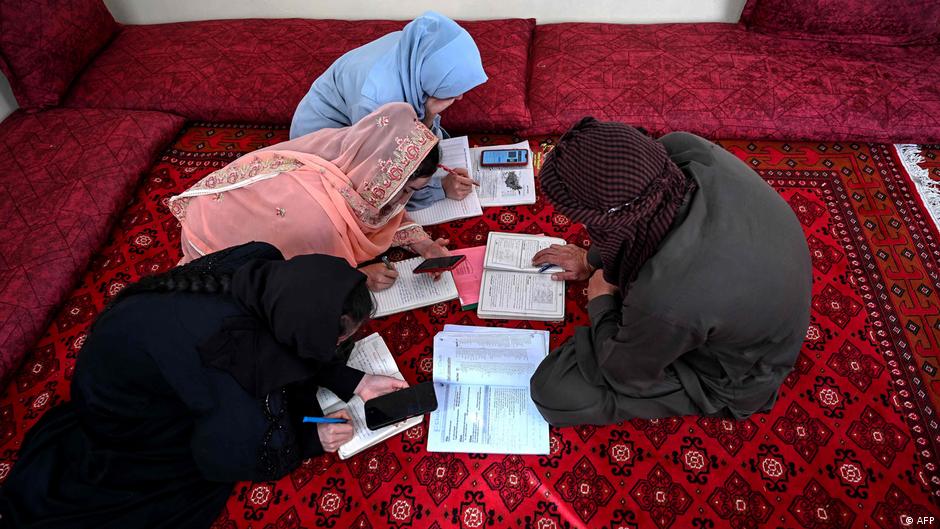
KABUL – An alarming 2.4 million girls across Afghanistan have been systematically excluded from secondary education since the Taliban regained control in 2021, according to a recent assessment by UNESCO. The United Nations agency confirmed this Tuesday, highlighting an increase of roughly 200,000 girls denied schooling in just the last year, with projections indicating this number could surge to nearly four million by 2030 if the current restrictions remain.
Afghanistan stands as the only country worldwide where girls and women are formally barred from both secondary and tertiary education. Hoda Jaberian, UNESCO’s program coordinator for education in emergencies, stressed the gravity of the situation, stating, "Five years is not a temporary interruption in a child’s education. It is clearly almost an entire secondary school cycle." This systemic exclusion marks a profound reversal, eroding two decades of significant advancements that saw nearly one million girls enrolled in secondary education by 2021, a stark contrast to the limited access available in 2001.
The Taliban’s re-ascension to power on August 15, 2021, following the withdrawal of US and NATO forces, initially came with assurances to the international community that women would retain their right to study. However, these promises quickly dissolved; secondary schools were closed to girls in March 2022, followed by a ban on women attending universities in December of the same year. Despite the Taliban describing these measures as temporary, they continue to be enforced. Authorities justify their stance by asserting respect for women's rights in accordance with their interpretation of Islamic law and Afghan culture, framing the issue as an internal matter.
The prohibitions extend far beyond education, encompassing severe limitations on women's employment, freedom of movement, and access to public spaces such as parks, gyms, and beauty salons. The United Nations has characterized this pervasive system of restrictions as “gender apartheid,” drawing global condemnation. Notably, Russia remains the only nation to formally recognize the Taliban administration.
The economic repercussions of this educational ban are profound. UNESCO estimates that the exclusion of women from secondary and higher education could lead to approximately 600,000 women being pushed out of the workforce by 2066. This could result in cumulative income losses totaling 9.6 billion US dollars and a heightened risk of early marriage for girls. Furthermore, the country faces a looming deficit of over 11,000 qualified female teachers by 2030, exacerbated by many educators leaving the country or being prohibited from teaching. Jaberian noted that restrictions on women teaching boys have also left some male students with unqualified instructors or no teachers at all.
Beyond the gender-based ban, Afghanistan’s broader education system is grappling with a multifaceted crisis. Over two million primary school children are out of school for other reasons, and more than 90% of ten-year-olds cannot read a simple text, with the national literacy rate standing at a mere 37%. Infrastructure challenges abound, with many schools overcrowded, poorly equipped, and nearly half lacking basic amenities like water, sanitation, or heating. This crisis is further compounded by the return of millions of people to Afghanistan—three million in 2025 alone, and over seven million since 2023—alongside natural disasters like earthquakes and floods, which have forced the closure of around 1,000 schools since 2021.
UNESCO has issued an urgent call for the immediate and unconditional restoration of the right to secondary and higher education for girls and women, while continuing to support community-based education, literacy, and skills programs often held in private homes or community spaces. For readers in Kenya, East Africa, and across the African continent, where the empowerment of women and girls through education is widely recognized as a cornerstone of sustainable development, economic growth, and social stability, the situation in Afghanistan serves as a stark global reminder of the fragility of educational gains and the profound, long-term societal costs incurred when fundamental human rights are systematically denied. (Source: DW News)